
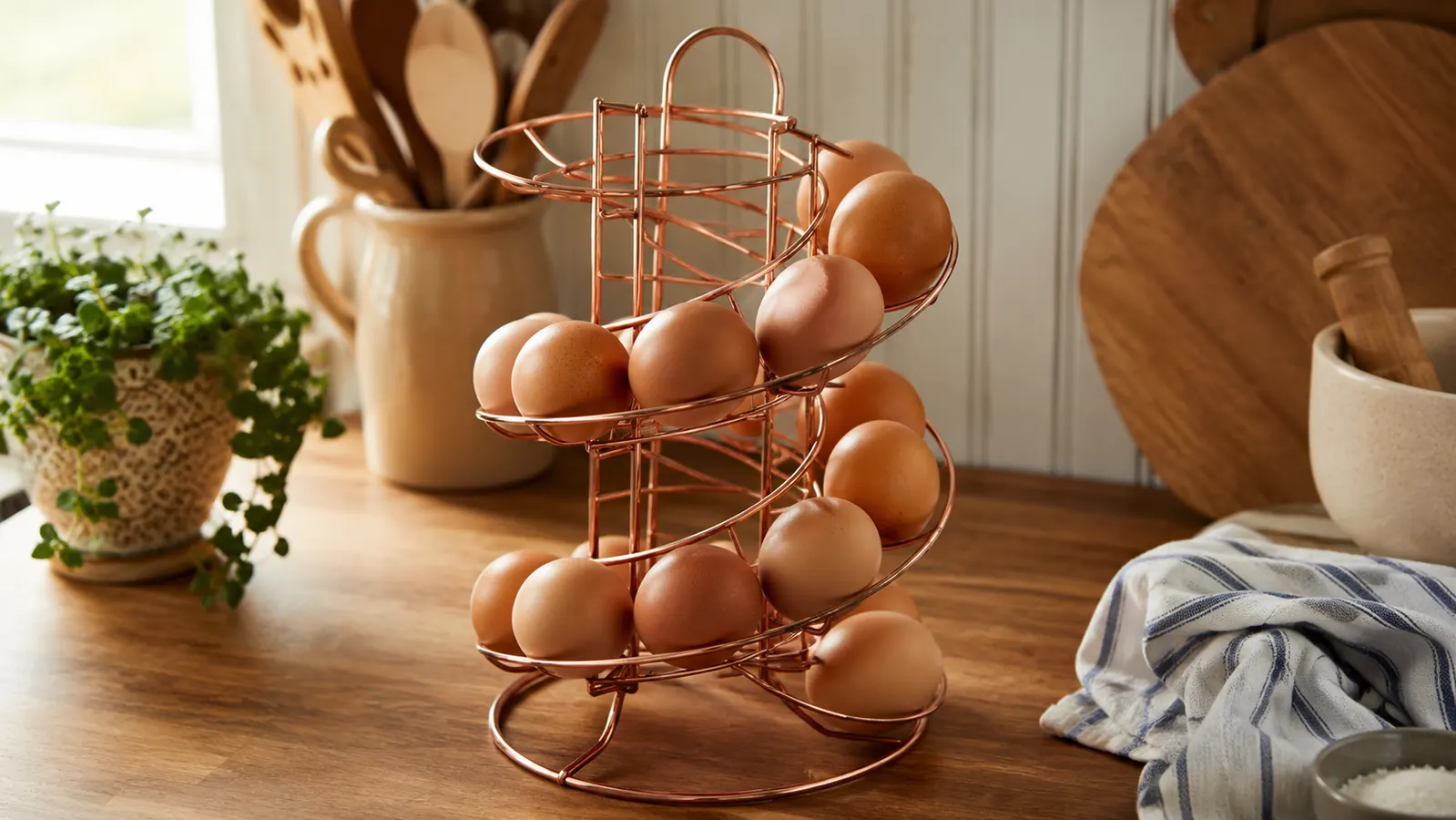
You clean the coop, you gather the eggs, you set them on the counter, and then you stand there wondering if you just made a mistake. Store them unwashed on the counter and somebody at the county fair tells you they'll spoil by Friday. Throw them in the fridge and your mother swears the yolks will taste like the onion drawer. I've kept a flock for seven years and spent most of that time bouncing between those two camps, wasting more eggs than I like to admit before I settled on a routine that just works, built around a Toplife spiral rack on the counter.
The truth is simpler than the arguments make it. Eggs that keep their bloom, that thin natural coating the hen puts on as she lays, can sit on the counter for weeks. Eggs that get washed lose that protection and need the fridge. And no matter which way you store them, the whole game is one idea: use the oldest first. That single habit keeps our dozen hens from ever handing me a fridge full of mystery eggs.
The Spiral Rack That Made Oldest-First Easy
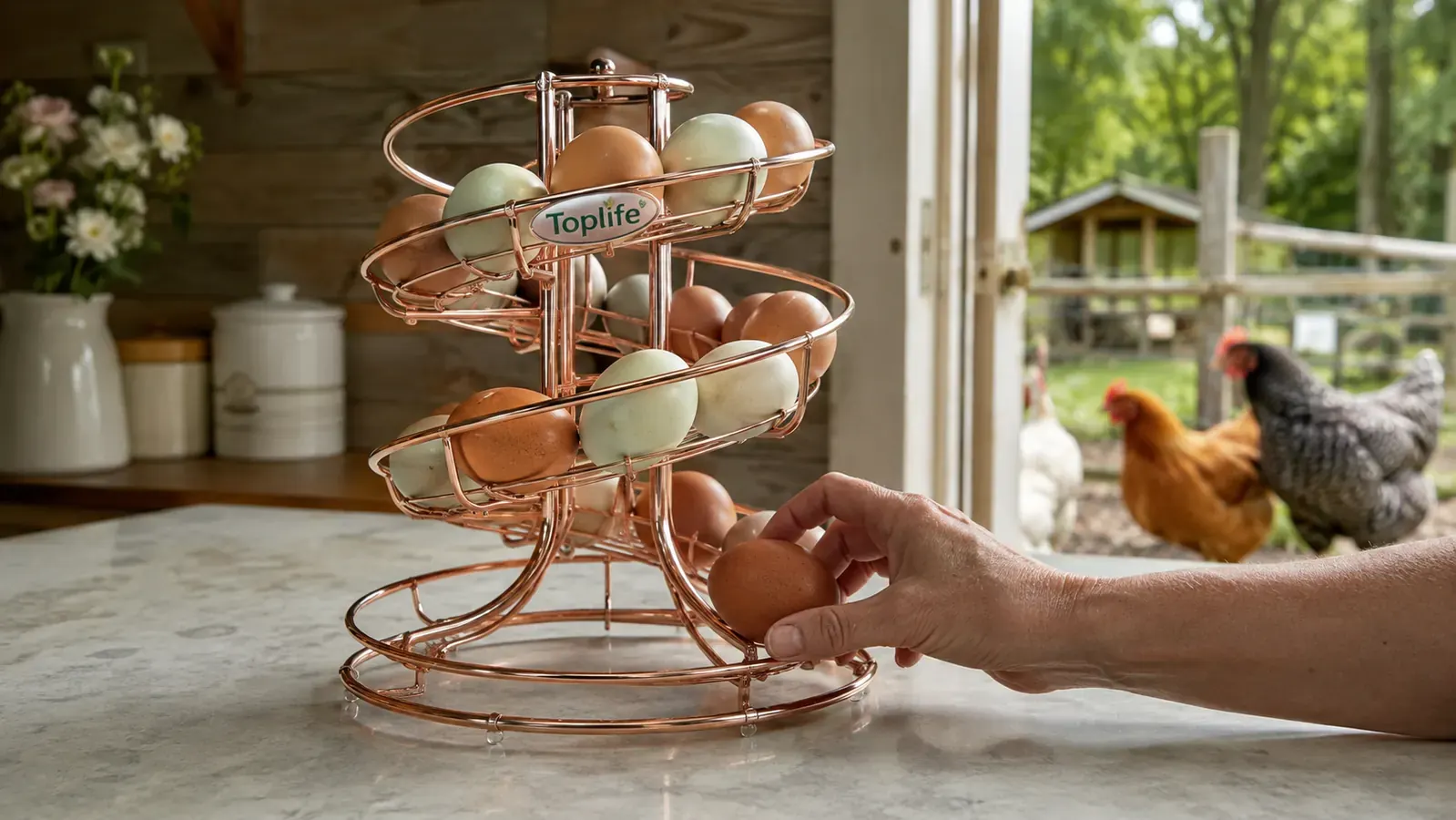
If your eggs sit in a bowl or a carton, the oldest ones hide in the back and you find them by smell. A spiral skelter rolls the old eggs out to the front every time you reach for one, so first in really does mean first out. That is why I keep my Toplife rack on the counter next to the stove, within arm's reach of the mixing bowl.
Amazon Check Today's Price on Amazon →My Counter and Fridge Routine, Step by Step
Before I walk you through it, here is the shape of the whole routine so you can see where we are headed. I decide ahead of time whether an egg is going on the counter or in the fridge when it reaches my hand. I gather every day and inspect each egg as it goes into the basket. Clean, unwashed eggs with their bloom intact go on the counter, pointy end down, where the oldest rolls out first. Anything I had to wash goes straight into the fridge. No egg sits anywhere long enough to go stale, and I never have to guess. Five decisions, none of them hard, all of them repeated every single day.
Step 1: Decide Whether You're Washing, Before You Collect Anything
This is the decision that sets up everything else, so make it early. If you plan to keep eggs on the counter, do not wash them. That bloom is the seal that keeps air and bacteria out, and the moment you rinse it off, the clock starts ticking on room-temperature storage. I wash only when the egg is genuinely dirty, which for me is maybe two or three eggs out of a dozen on a wet week in the spring.
For the dirty ones, I scrape off dried bedding or droppings with my thumbnail or a bit of fine sandpaper before I ever reach for water. Dry cleaning keeps the bloom intact on the clean eggs and leaves me with far fewer washed eggs to worry about. If you absolutely must wet-wash one, use water warmer than the egg and use it right away or put it in the fridge. Cold water on a warm egg pulls the contents back toward the shell and invites bacteria in, and that is one of those little details that makes the difference between eggs that keep and eggs that don't.
Some folks wash every single egg because it looks nicer when they sell them, and that is their business. But if these are your eggs and your kitchen, less washing means longer counter life, which is the whole point of this article. A clean nest box does more for the look of your eggs than a quick rinse ever does, and it does not cost you any shelf life.
Step 2: Collect Daily and Check Every Egg Before It Goes Anywhere
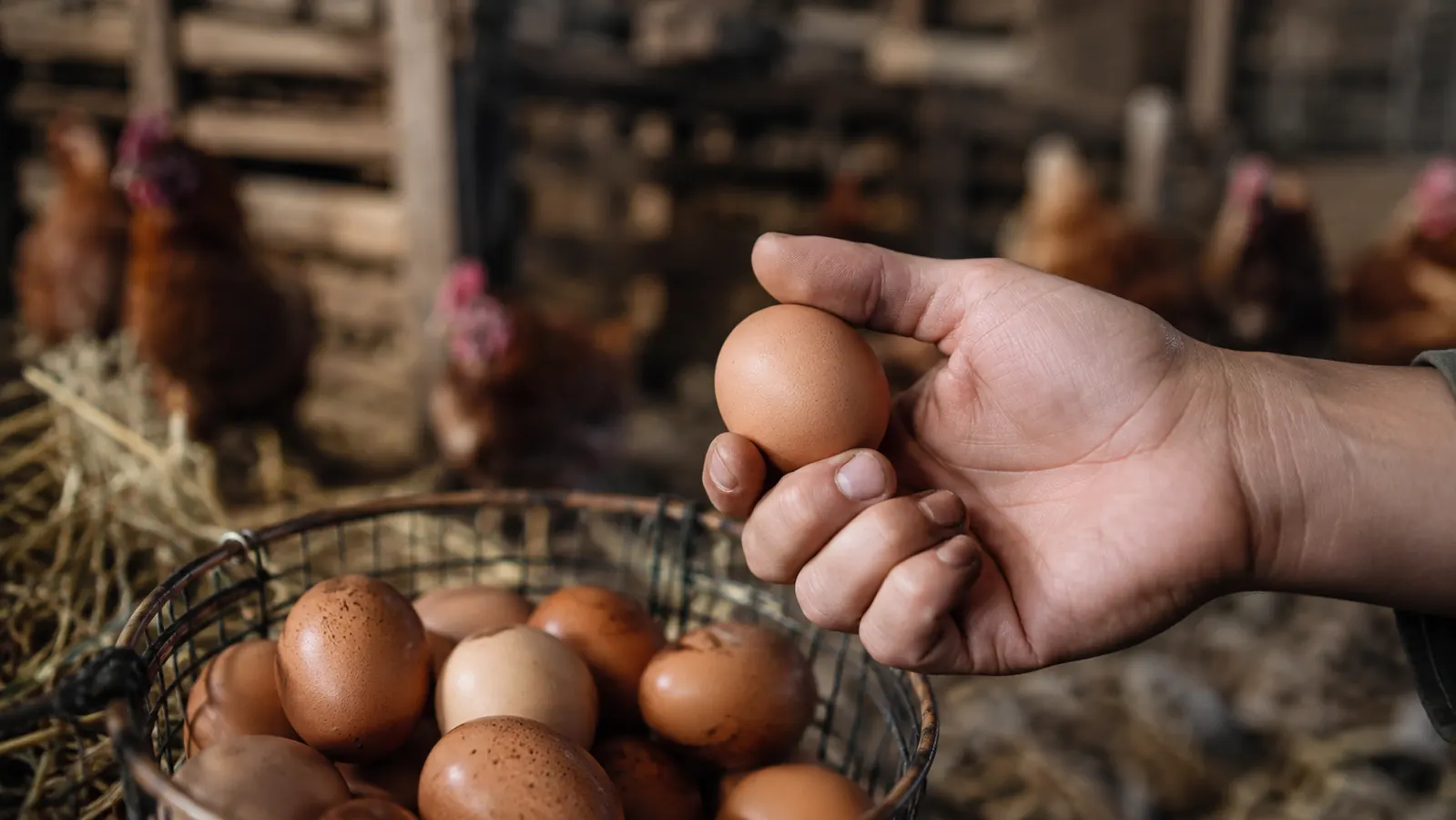
I gather eggs in the morning when I do feed and water, and again in the late afternoon in summer when the hens are laying harder. Eggs left sitting in a nest box can pick up dirt, get pecked, or attract mites, and a hairline crack is easy to miss until it smells. So I run my hand over each one on its way to the basket, feeling for rough spots and checking for the thin white lines of a hairline crack that a fast glance will skip right over.
Cracked eggs do not belong on the counter and they do not belong in a carton with sound ones. I use cracked eggs that day, either scrambled or in a cake, and I never let one sit in with the rest. A single bad egg can ruin the dozen beside it, and no storage trick fixes that. If I have more cracked eggs than I can use in a day, they get fed to the dogs or worked into a quiche, never saved.
Gathering twice a day also keeps the hens from getting territorial over a nest box full of eggs, which is a small thing until you meet a broody hen who has decided otherwise. Daily collection is the kind of boring habit that quietly prevents the dramatic problems.
Step 3: Put Unwashed Eggs on the Counter, Washed Eggs in the Fridge
Here is the split that ends the argument. Unwashed eggs with their bloom intact are fine on the counter for two to three weeks, and they are easier to work with at room temperature for baking. Washed eggs, and any eggs you know were washed at a store, belong in the fridge, where they keep for a couple of months. The bloom is why farm-fresh counter eggs work and store-bought ones do not, and understanding that one fact clears up most of the confusion people carry about egg storage.
I keep most of our counter eggs in a spiral skelter on the counter, where they roll for a straight shot to the front. That rack is the Toplife design and it holds about eighteen eggs, which is roughly what my dozen hens hand me over a few days of normal laying. It keeps them out of the way, it shows off what I've gathered, and the oldest egg always sits at the bottom of the ramp waiting to be taken first. My Toplife skelter lives next to the toaster, where I reach for it automatically every morning.
For the washed eggs, I set them pointy end down in a carton on a middle fridge shelf, never the door, because the door warms and cools with every open and shut. I mark the carton with the date so I have some idea when they went in, even if I am not keeping a careful ledger on every single egg.
Step 4: Store Pointy End Down and Let the Rack Rotate for You
The reasoning runs both ways depending on who you ask, but I keep eggs pointy end down because it keeps the air cell at the top and the yolk centered, and that is what the hens' own nests encourage anyway. On a flat tray or in a carton, I set each egg narrow end down. On the spiral, the rack does the aiming for me, which is one less thing to think about at six in the morning.
Rotation is the real quiet win. A bowl hides the oldest eggs at the bottom, and a carton hides them at the back, and I have found too many stale ones that way. The whole reason I reach for the spiral is that it forces first in, first out without me keeping a mental ledger. You take the front egg, the rest roll one step forward, and the newest ones go on top at the back where they belong. New eggs go in the top opening, old eggs come out at the bottom, and the queue never gets shuffled.
That seems like a small thing until you live it. Before I had a rack, I routinely found eggs at the bottom of a bowl that had been sitting for three weeks. With the spiral, every egg gets used in the order it was laid, which means every egg gets used while it is still good. The rack quietly does the thinking that my groggy morning self would rather not do.
Step 5: Skip the Float Test Debate and Just Use the Oldest First
You have probably heard the trick where you drop an egg in water and watch whether it floats. Floaters are old, swimmers are not, and it is a fine party trick. I do not rely on it, because a floating egg only tells you it is stale, not whether it is safe. The clean way to stay ahead of stale eggs is to never let one sit long enough to need the test in the first place.
That means portioning for how much my household actually eats. We go through about two dozen eggs a week between breakfast, baking, and the dogs who get a scrambled egg when they look hard done by. So a counter skelter full is not a museum, it is a working pantry, and it empties fast enough that nothing goes old. If you bake or eat fewer eggs than your hens lay, freeze the extras or share them with a neighbor before they get the chance to sit.
To freeze extras, crack them into a muffin tin, give each one a pinch of salt so the yolks do not gum up, and once they are solid pop them into a freezer bag. Thaw them in the fridge the night before you need them. It is a small bit of effort that turns a spring egg glut into baking eggs for the slow summer weeks, and it fits right in with using what the flock gives you instead of wasting it.
That Toplife spiral gives me the oldest egg first without thinking, and that one habit is the whole difference between a steady kitchen and a forgotten dozen in the back of the fridge.
What Else Helps
Counter storage works because of three quiet helpers. First, keep eggs out of direct sunlight and away from the stove, because heat ages them faster. A shaded corner of the counter, or a counter-height rack near the window where the sun does not land, beats a warm spot over the oven every time. My kitchen has one hot corner beside the range and I have learned the hard way not to set eggs there.
Second, keep the nest boxes clean and the bedding fresh. A clean box means cleaner eggs, and cleaner eggs mean fewer washed eggs, and fewer washed eggs mean longer shelf life. That chain starts in the coop, not the kitchen. I refresh the shavings in the nest boxes weekly and do a fuller cleanout when they start to look tired, and the eggs that come out of them need almost no help.
Third, if you do keep any in the fridge, put them in the main body rather than the door. The door swings open and shut all day and warms the eggs a little each time, which is exactly the slow creep you want to avoid. A carton on a middle shelf keeps a steady temperature and keeps those eggs good for weeks longer than the door ever will. Steady temperature is the whole secret of cold storage, and the door is the least steady place in the refrigerator.
And when the flock goes through its spring surge and you suddenly have more eggs than anyone can eat, do not panic. Unwashed eggs, kept dry and out of the sun, will hold on the counter for a few weeks, and that buys you time to gift them, sell them, or reach for the fridge for the longer haul. The egg is a remarkably forgiving piece of food when you respect that one natural coating on its shell.
Stop Losing Eggs to the Back of the Counter
Whether you are new to the flock or you have been at it for years, the move that fixed our kitchen was putting the eggs where the oldest one is the one you grab. A spiral rack does that work for you at every single gathering, and it keeps the harvest where you can see it instead of hiding it away.
Amazon Check Today's Price on Amazon →