
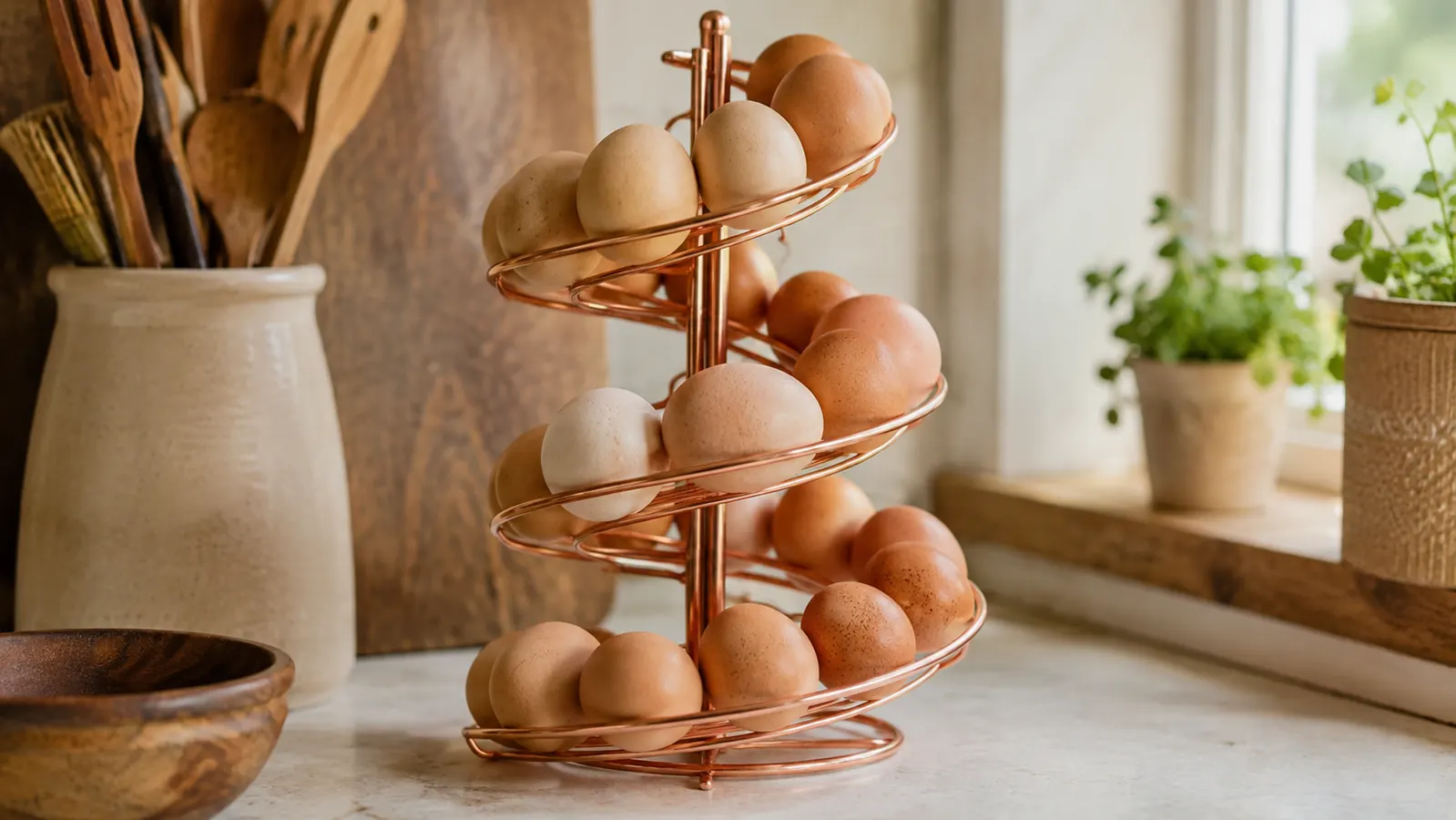
You wash your eggs, you line up a stack of cartons in the fridge, you think you're doing it right. Then you crack one for breakfast and it tastes like the carton you bought at the store, not the one your hen laid that morning. The problem isn't your hens. It's where you've been putting their work. Fresh, unwashed eggs belong on the counter, and once I switched, I never went back.
This isn't a guess. My flock of about a dozen hens in Missouri lays through most of the year, and for the past year I've kept the harvest in a Toplife egg skelter on the kitchen counter instead of the fridge. Ten reasons why the counter wins, and how the skelter makes the whole thing work without a single egg going to waste.
The Quickest Way to Start Storing Eggs the Right Way
A spiral egg skelter is what makes counter storage actually work, rolling the oldest egg out first so nothing sits and goes stale. That's the one I keep loading every morning.
Amazon Check Today's Price on Amazon →The bloom is your built-in preservative
When a hen lays an egg, she coats it in a thin natural seal called the bloom. That seal keeps air and bacteria out, which is exactly why an unwashed fresh egg will hold at room temperature for a couple of weeks without turning. The moment you wash it, you scrub that protection away and the egg starts aging faster. Leave the bloom on, leave the egg out, and you've done nothing but let the hen do her job. This is the one reason I mention first when someone new asks, because it's the whole ballgame. Everything else on this list is convenience; the bloom is what makes the counter life safe in the first place. A spiral rack handles these unwashed eggs gently, and the Toplife one gives each shell its own spot so the protective coating stays dry and intact until you need it.
Counter eggs beat fridge eggs in baking
Room-temperature eggs whip up lighter and blend into batter more evenly than cold ones straight from the fridge. Every baker who keeps hens discovers this sooner or later. If your eggs already live on the counter, you skip the whole warm-them-up step before making a cake or a batch of pancakes. That counts for more than you'd think. Cold eggs seize up a sponge the moment they hit the butter, and I've thrown out more than one batch in my early baking days because I was in too much of a hurry. Now the eggs are sitting right there, already at kitchen temperature, and the only thing between me and a light crumb is a clean bowl.
You stop scrubbing flavor off the shell
The reason store eggs live in the fridge is that they've already been washed and sanitized before they get to you. Yours haven't. If you keep rinsing every fresh egg in soap and water, you're treating them like grocery eggs when they aren't. Store them unwashed, use them unwashed, and the only eggs you wash are the ones you're about to crack, right before cooking. That's not just less labor, it's less time wasted at the sink every single morning. You wouldn't wash an apple before you put it in the fruit bowl, and a fresh egg with its bloom on asks for about the same light touch.
Oldest-first actually happens
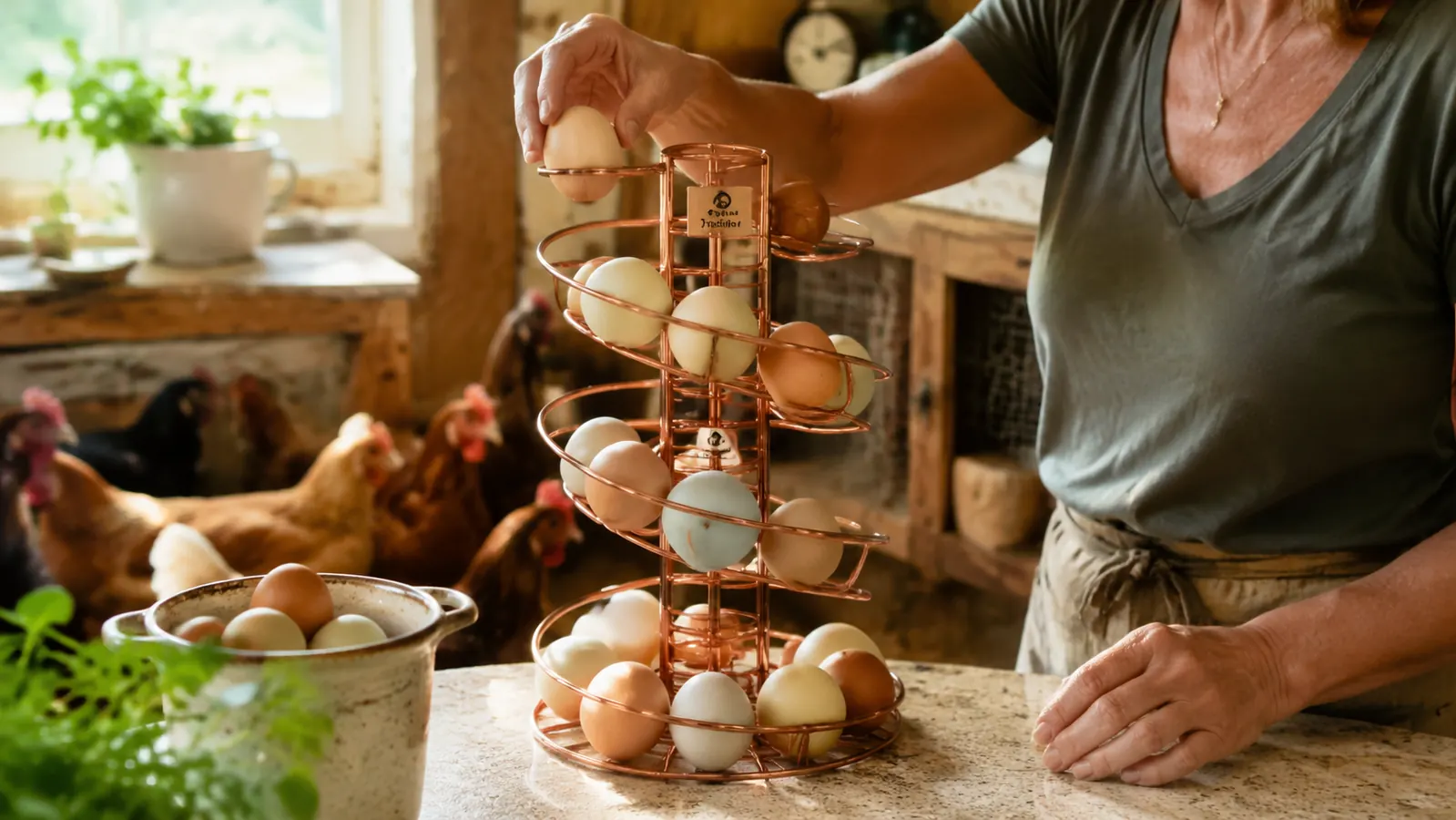
A pile of eggs in a bowl is a guessing game. You grab from the top, the same three or four eggs sit at the bottom for two weeks, and one day you crack one and wish you hadn't. A skelter loads fresh eggs at the top and lets the oldest roll out the bottom first. For a small homestead, that rotation is the whole point, and it does the remembering for you.
You actually see what the flock gave you
There is something grounding about walking into the kitchen in the morning and seeing a spiral of brown and cream eggs, the proof of the work you did at dawn. It is not about decoration. It is about not losing track of a good harvest. When the skelter is nearly empty, you know it's time to collect more, and when it's full, you start thinking about who to gift a dozen to. I have handed more cartons off to the neighbors than I can count, and the skelter is what reminds me the hens are still earning their keep even on a slow week.
It frees up a shelf in the fridge
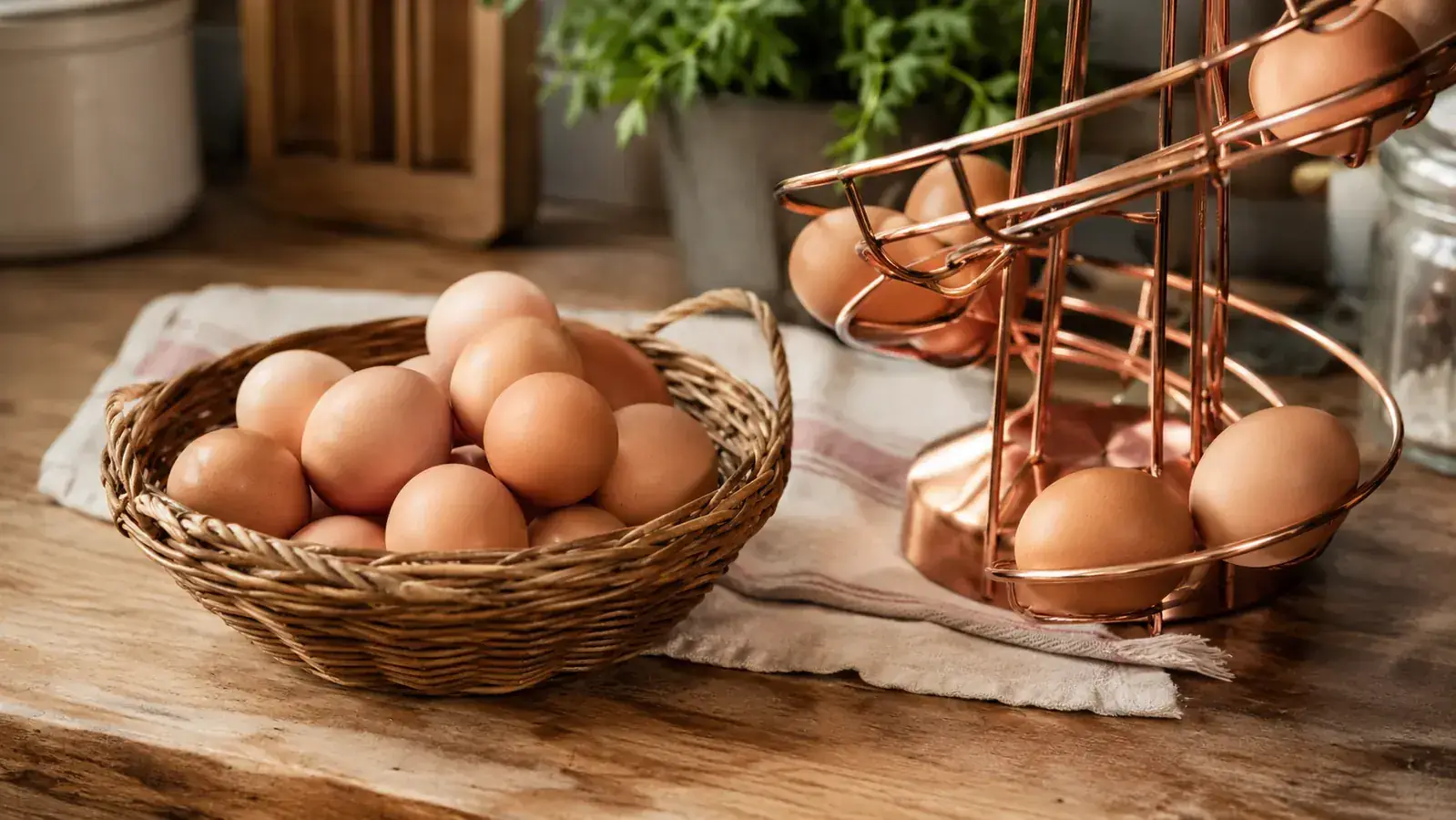
For a flock of a dozen hens, the daily haul adds up fast, and every carton I used to stack was taking real estate my milk and leftovers needed. Moving the eggs to the counter put that refrigerator shelf back. On a busy homestead, that extra space is worth more than it sounds. My fridge is short on room no matter how I organize it, so getting a whole shelf back feels like a small miracle. It also means I reach for the eggs where I actually cook, instead of making an extra trip to the cold box.
Fewer knockovers and cracked shells
A bowl of eggs on the counter is one dog's tail away from a mess. I learned that the hard way. The Toplife skelter holds each egg in its own cradle on a stable spiral base, so nothing rolls off and a bump doesn't send the whole batch sliding. Twenty eggs that stay whole beat twenty eggs you have to scramble early.
The counter is the honest expiration check
A fridge hides eggs. They sit in the back behind the yogurt, you forget how old they are, and you waste them. On the counter, an egg that has been there too long is plain to see and easy to test with the sink float before you use it. You use counter eggs fast because they're in front of you, and using them fast is the best way to keep them from ever going bad.
Your breakfast tastes like breakfast again
Store-bought eggs can sit in cold storage for weeks before they ever reach you. Yours come from birds that roost twenty feet from your back door. Kept unwashed on the counter, a fried egg still tastes like the farm it came from, rich and orange in the center. That difference is why a lot of us keep hens in the first place. The first time my husband raised an eyebrow at how good a plain scrambled egg tasted, I knew the counter had won him over too, and he never once asked me to move the eggs back.
It keeps the whole household eating them
When the eggs are stacked out of sight, my family reaches for cereal. When they're sitting there in a spiral, one of us grabs two for an omelet without being told. A skelter turns a hidden chore into food that gets used, which is the quietest win of all. What gets eaten doesn't get wasted, and it doesn't become a guilt trip in the fridge. It's the rare storage decision that actually changes how much of something good you eat, and that, to me, is the whole point of keeping the eggs where they're seen.
What I'd Skip If I Were Starting Over
The counter life only works if you keep two rules straight. First, only unwashed eggs belong out there. If you wash an egg, move it to the fridge and use it within a couple of days, because that bloom is gone. Second, don't overload a small skelter and then forget the bottom. Pick a size that fits your daily harvest, not your biggest Saturday haul, and keep the rotation moving. The skelter I use holds a good amount for my flock, and for a larger one you'd want to size up or keep two going.
The morning I stopped washing my eggs and started trusting the bloom, breakfast stopped tasting like a trip to the grocery store and started tasting like my own coop.
Store Eggs the Way the Hen Intended
If you're collecting eggs every morning, give the counter life a fair shot with a spiral skelter. It holds your harvest, cycles the oldest forward, and keeps the eggs where they actually get eaten.
Amazon Check Today's Price on Amazon →