
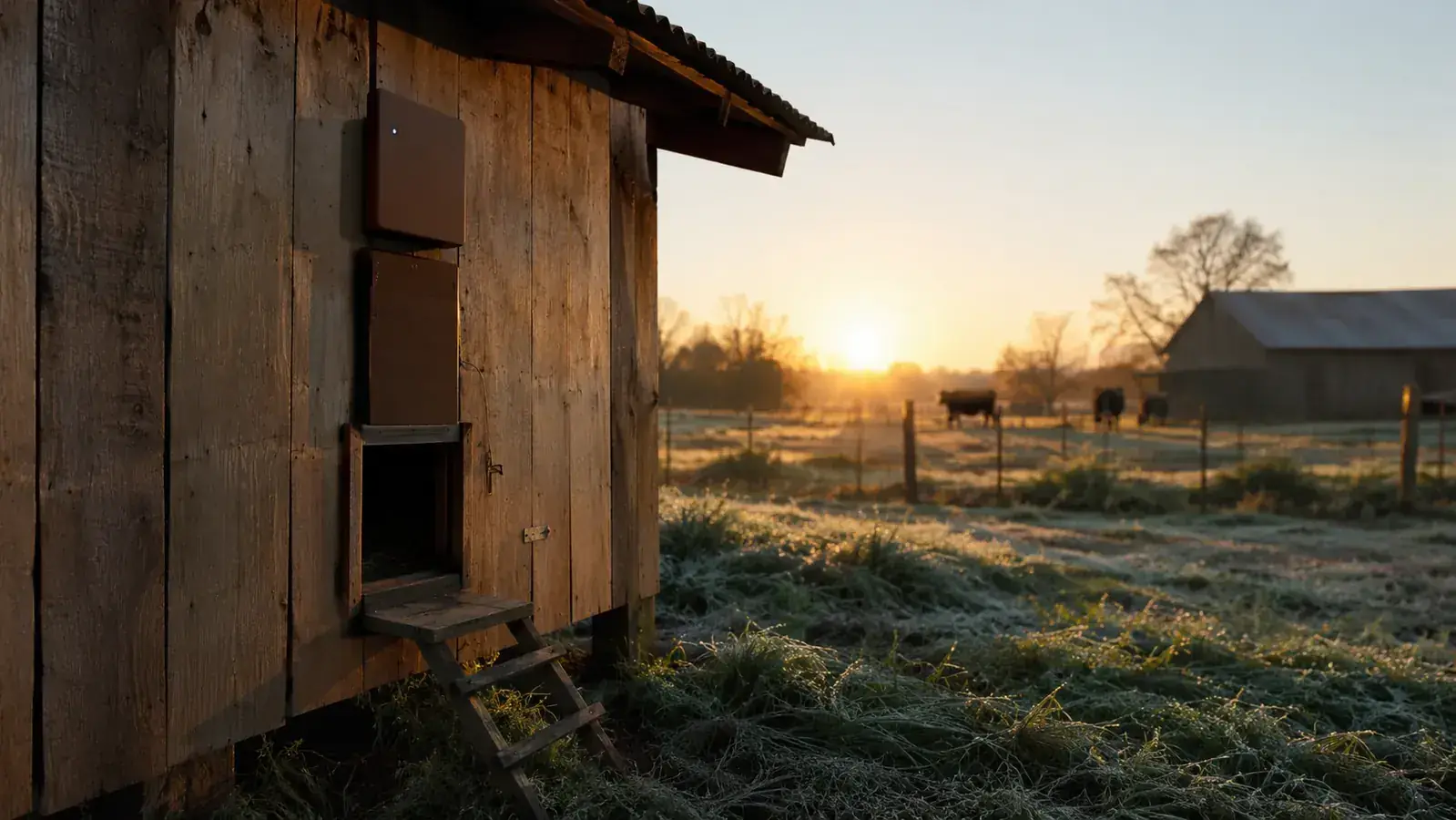
For the first three winters of keeping chickens, I was the automatic door. Every night around dusk I walked out to the coop in whatever the weather was doing and made sure the pop hole was closed before anything with four legs decided to come calling. Most nights it was fine. Some nights I got busy, or it got dark faster than I expected, and I found myself crunching through snow at nine o'clock muttering at my own forgetfulness. I knew a raccoon or a fox only needs one loose night to do real damage.
So a year ago I mounted a RUN-CHICKEN T50 automatic coop door on our coop, set it to open at dawn and close at dusk, and let it take over the job I'd been doing by hand. Twelve hens, one Missouri winter with real snow, a wet spring, and a muggy summer later, this is what that year of automatic mornings was actually like.
The Quick Verdict
After a full year of daily use, the RUN-CHICKEN T50 has earned its place on our coop wall: dependable, weatherproof, and simple enough that I stopped thinking about it. It is not the most feature-packed door on the market, but it does the one job that matters every single day.
Amazon Check Today's Price →Give Up the Evening Coop Walk Before You Forget One Too Many Times
If you're still closing that pop hole by hand, the RUN-CHICKEN T50 is the simplest way to hand the job to a timer that never gets busy and never loses track of the light. I've run mine every day for a year.
Amazon Check Today's Price on Amazon →How I've Used It
The T50 is a battery-powered sliding door that mounts to the wall of a coop and opens a metal plate across the pop hole. Mine runs on the included rechargeable pack, which I charge by plugging the unit into a wall outlet every few months through a short cord that runs into the coop's interior. You can also run it direct on AA batteries if you don't want to mess with a cord at all.
I chose the light-sensor mode over the fixed timer. The door reads ambient light and opens when it gets light enough in the morning and closes when it gets dark. That mattered to me because sunrise and sunset shift by hours over the course of a season, and a door set to a fixed clock in September would be closing far too late by December. The sensor handles that drift on its own, which is exactly what I wanted from something I didn't want to fuss with.
Mounting took a single afternoon. The unit comes with a mounting template, and the door slides in a track you screw to the pop hole frame. The control box sits on the wall. There's a setting for whether the door is mounted on the left or right and which way it opens, and getting those right the first time matters or the door will try to open into the frame. Read that part of the manual twice, like I tell every first-timer, and it's a straightforward install.
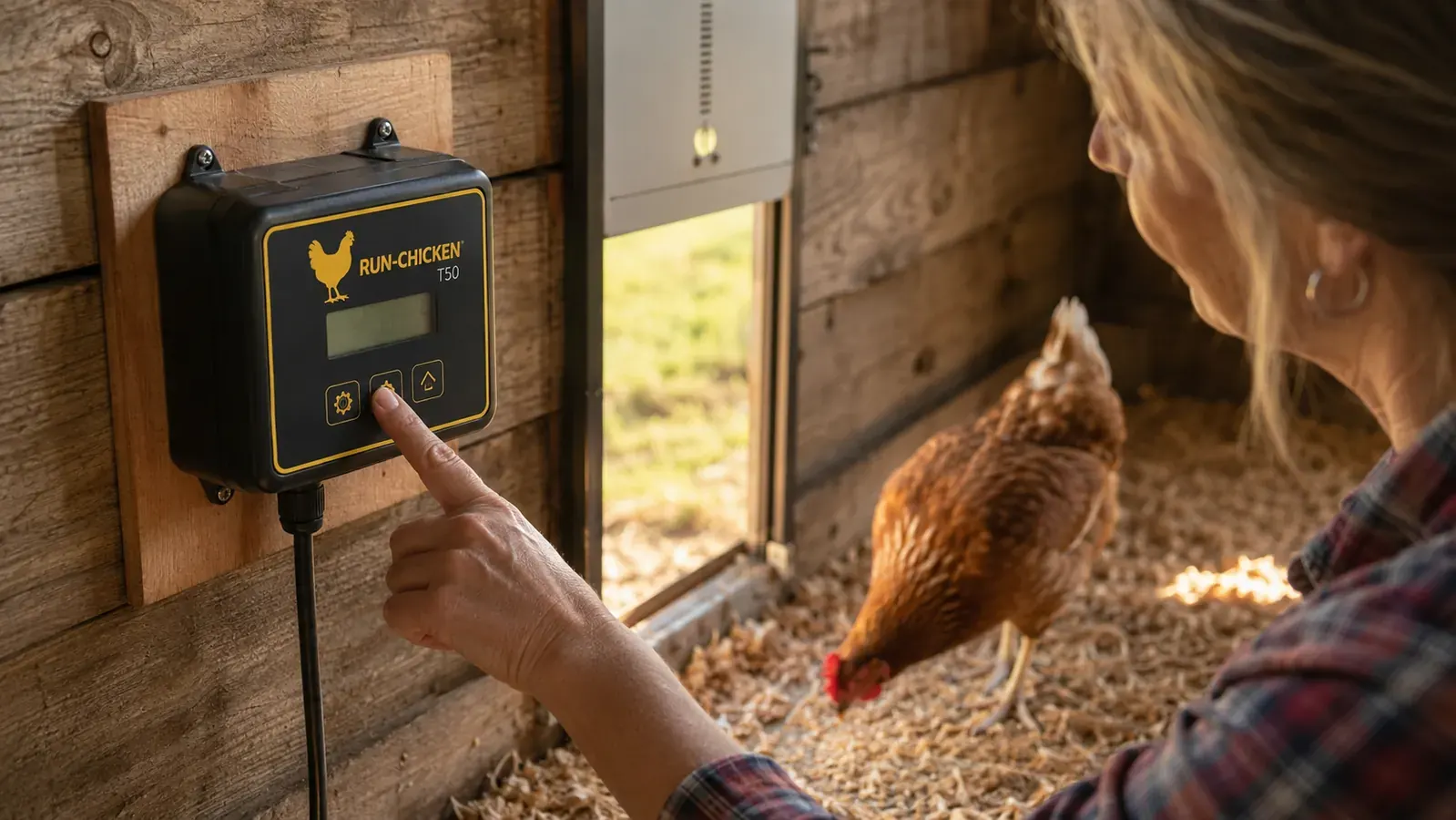
The timer mode deserves a fair mention too, because not everyone wants to trust a light sensor, and some coops sit in shade all afternoon. The T50 lets you set a fixed open time and a fixed close time down to the minute, and you can even mix modes: open on the sensor and close on the clock, or the other way around. I ran it on a fixed clock for two weeks in the fall just to confirm it worked as printed, and the door opened at 6:40 every morning like clockwork. I switched back to the sensor because I like that it follows the real sunrise through the year, but the timer option is there, set with two buttons on the control box and no phone or app in sight.
The Fight for the Closing Time
The whole point of this door is that it closes reliably, so that's what I watched closest. Over the year it closed on its own maybe 360 nights out of 365. I can name the exceptions, because there were so few of them. Twice it closed in the middle of a particularly dark, heavy overcast afternoon when the light sensor decided it was dusk early, and the hens were still out in the run. They didn't panic, but I opened it back up for them and set it to a slightly later close threshold.
The other three times were my own doing: I had the unit unplugged to charge it and forgot to plug it back in before nightfall. That's not the door's fault, and it was the kind of mistake I used to make by hand every season anyway. The running lesson from the year is that a light-sensor door wants to be pointed somewhere it can see actual daylight, not tucked into a dark corner of the coop where the sensor reads false dusk.
What I watched closest was how the door behaved at the edges of the day, the minutes where the difference between a safe close and a too-early close is a hen still out scratching in the run. On a normal evening the T50 closed about twenty minutes after I would have closed it by hand, once the light died enough for the last straggler to head in. That is the timing that matters: early enough that a raccoon does not get a window into the coop, late enough that nobody gets locked out overnight. Getting that balance right is what separates a door you can genuinely forget about from one you keep second-guessing every dusk.
In a full year the T50 closed on its own about 360 nights out of 365, and every miss was my forgetting to plug it back in or a heavy overcast afternoon reading as dusk.
Weather, Batteries, and the Rechargeable Pack
This is the part I was most skeptical about, because a coop door lives outside in the worst of whatever the year throws at it. Ours took temperatures down into the single digits, a couple of ice storms, weeks of straight rain in the spring, and a stretch of 95 degree humid days in July. The door is aluminum and the control box seals up tight. I went through the winter expecting it to bind or stall, and it just kept sliding.
The rechargeable pack gave me roughly two and a half to three months per charge, which lines up with how the company describes it. I charged it more often in winter, because the cold works against lithium batteries and I'd rather top it off early than be out there at 9pm anyway. There's a low-battery light on the control box, and I learned to pay attention to it the one time I ignored it and the door limped through a close on a weak pack. Charge the pack when the light comes on, not a week later.
One honest note on the sensor in winter: a light layer of snow or ice over the sensor window can make it read poorly, and blowing snow right at the opening can confuse it. A dry cloth wiped over the sensor before a storm gets most of the way there. I also kept the track wiped clean of built-up shavings and grit, which took about a minute a month, and the door never once stuck in the track.
The ice storm in February was the real test. Freezing rain coated everything, and I half expected the door to stick in its track or the sensor to misread the glare off wet ground as daylight. It closed normally that night, and the next morning I brushed a dusting of snow off the control box and it opened right on schedule. The only trouble I hit was when ice built along the bottom edge of the door plate and made the final close a little slow and deliberate. A thin scrape with a putty knife before a hard freeze took care of it. That has been the whole scope of winter maintenance this door has asked of me.
Predator Proofing Where It Counts
The door plate itself is solid metal with no gap a raccoon can pry, and the motor holds the closed position with enough force that a determined push from outside just read as a mild bump. Our coop sits in pasture where raccoons, foxes, and the neighbor's roaming tomcat all come through at night, and in a year I found no evidence that any of them got the door open.
Where I added a little extra was the frame around the pop hole, not the door. The T50 closes the opening, but a determined predator can still work at the wood around an older, well-worn pop hole frame. I mounted a solid aluminum threshold plate under the door track and reinforced the corners. That's routine predator-proofing for any coop door, automatic or not, and it's worth mentioning because people assume the door does the whole job on its own.
There was one stretch of nights in the fall that made the whole purchase worth it. A fox worked the coop line for a week, and one morning I came out to find fresh digging along the base of the run but no way into the coop and all twelve hens accounted for on the roost. The door had closed at dusk like it always did, so the fox only ever met a solid metal plate and a frame I had reinforced. I have seen what a predator does to a flock of hens, and it is not something you watch twice. That morning I stopped treating the T50 as a convenience and started treating it as part of the predator fence itself.
What I Liked
- Closed on its own about 360 of 365 nights in my first year
- Light sensor adjusts open and close times with the seasons automatically
- Rechargeable pack lasts two and a half to three months per charge
- Solid aluminum door holds firm against raccoon paws and pressure
- Straightforward weekend install with a mounting template
- Handles cold, ice, rain, and summer heat without binding
Where It Falls Short
- Light sensor can read a heavy overcast afternoon as dusk and close early
- Needs to be mounted where it can see real daylight, which limits placement
- Rechargeable pack needs a plug to charge, so you'll want power near the coop
- You must remember to charge before a storm or the low-battery light is all you get
Who This Is For
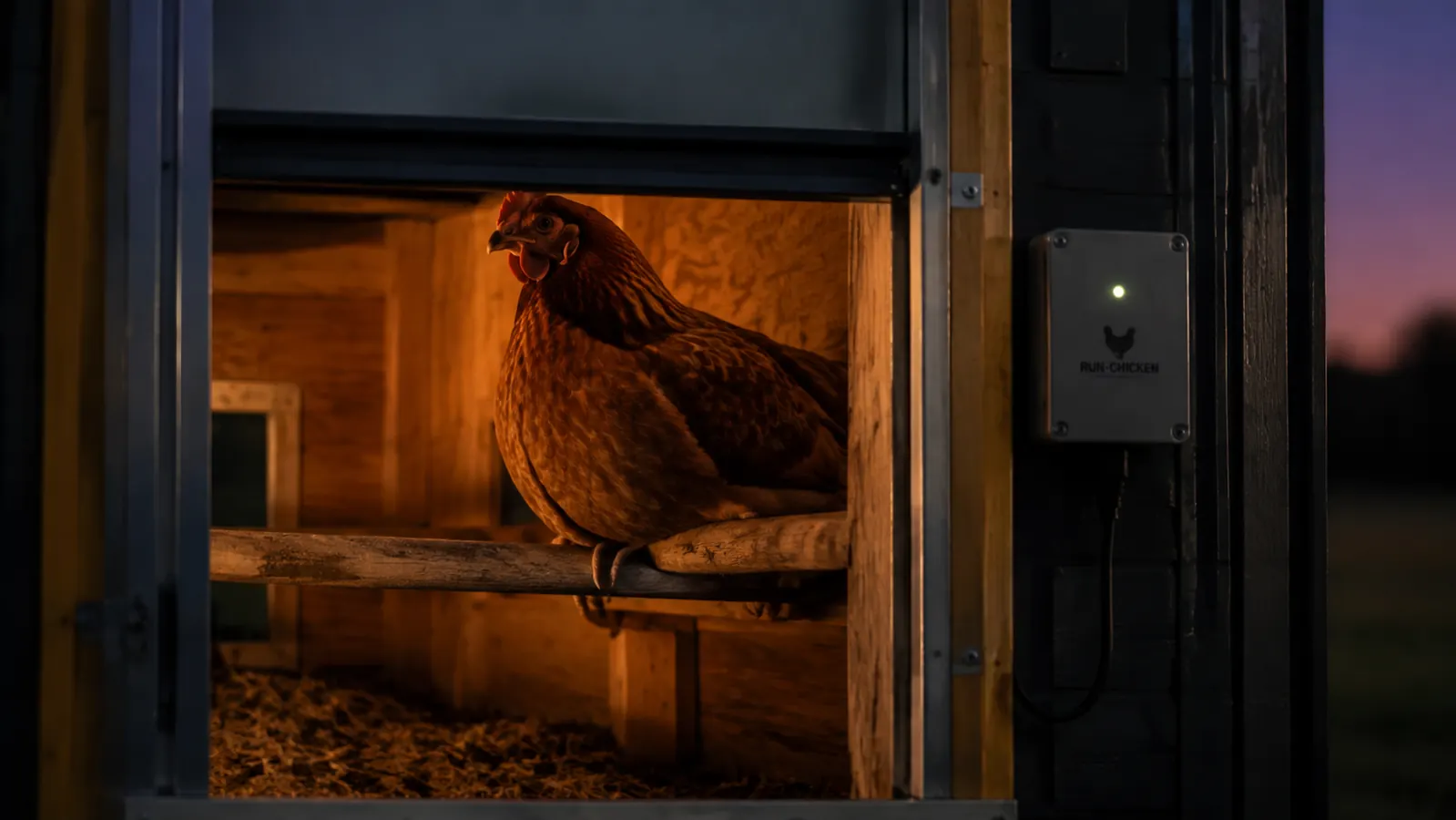
This door is for anyone who keeps a flock and has a life that doesn't always end at the coop. It's for the person who gets home late and used to stand in the dark hoping they remembered to shut the pop hole, and for the one who has finally accepted that no, they do not reliably remember, year after year. It's for people who want a simple, set-and-forget door that follows the sun through the seasons without fiddling with an app or a clock.
It's also for anyone who wants the peace of mind that comes from knowing the flock is sealed in at night even on the nights you're not there. If you travel for work, or you're sick, or a family thing keeps you out past dark, an automatic door is the difference between a safe roost and a gamble. For my money that's the whole value of the thing, and it's why it has a permanent spot on our coop wall.
Who Should Skip It
If your pop hole is in a spot with no clean view of daylight, or you keep your coop door in a fully enclosed building with artificial light, the T50's light-sensor mode will fight you. You can run it on the fixed timer mode instead, but then you're back to resetting it as the seasons change, which defeats a lot of the convenience.
And if you can't get a power cord near the coop at all, the rechargeable pack becomes a chore rather than a help, because you'll be lugging the unit inside to charge it every couple of months. There are other automatic doors with better weatherproofing at the sensor and longer battery claims for exactly that situation. If you'd rather have an app and remote control and real-time status, the T50's simple sensor-and-button setup will feel limited. It has no Wi-Fi, no app, no notifications. For me that's a feature, because there's less to fail. For you it might be a dealbreaker.
The Bottom Line After a Year
A year in, the RUN-CHICKEN T50 has done what I bought it to do and asked very little in return. It closed the flock in about 360 nights out of 365, took a full Missouri winter without binding, and made one part of everyday chicken keeping genuinely easier. It is not the fanciest door on the market, and it has the sensor placement and charging quirks I've described. But it is reliable in exactly the way that matters, and a year of not walking out in the dark to check the pop hole is a year I don't want to give back.
Who This Is For, One More Time
If you're on the fence because you keep a small flock and the door feels like a luxury, I'll tell you the same thing I'd tell a neighbor over the gate: the evening coop walk is the easiest habit to break, and the one time you break it on the wrong night is the night it costs you a hen. A door that closes itself on schedule removes that whole failure from the equation. That's what the RUN-CHICKEN T50 gave us, and it keeps giving it every morning and every evening.
Hand the Evening Coop Walk to Something That Never Forgets
A year later I'd buy the RUN-CHICKEN T50 again without a second thought. If you're tired of being the one who has to remember the pop hole every single night, this is the door that takes that job off your hands.
Amazon Check Today's Price on Amazon →