
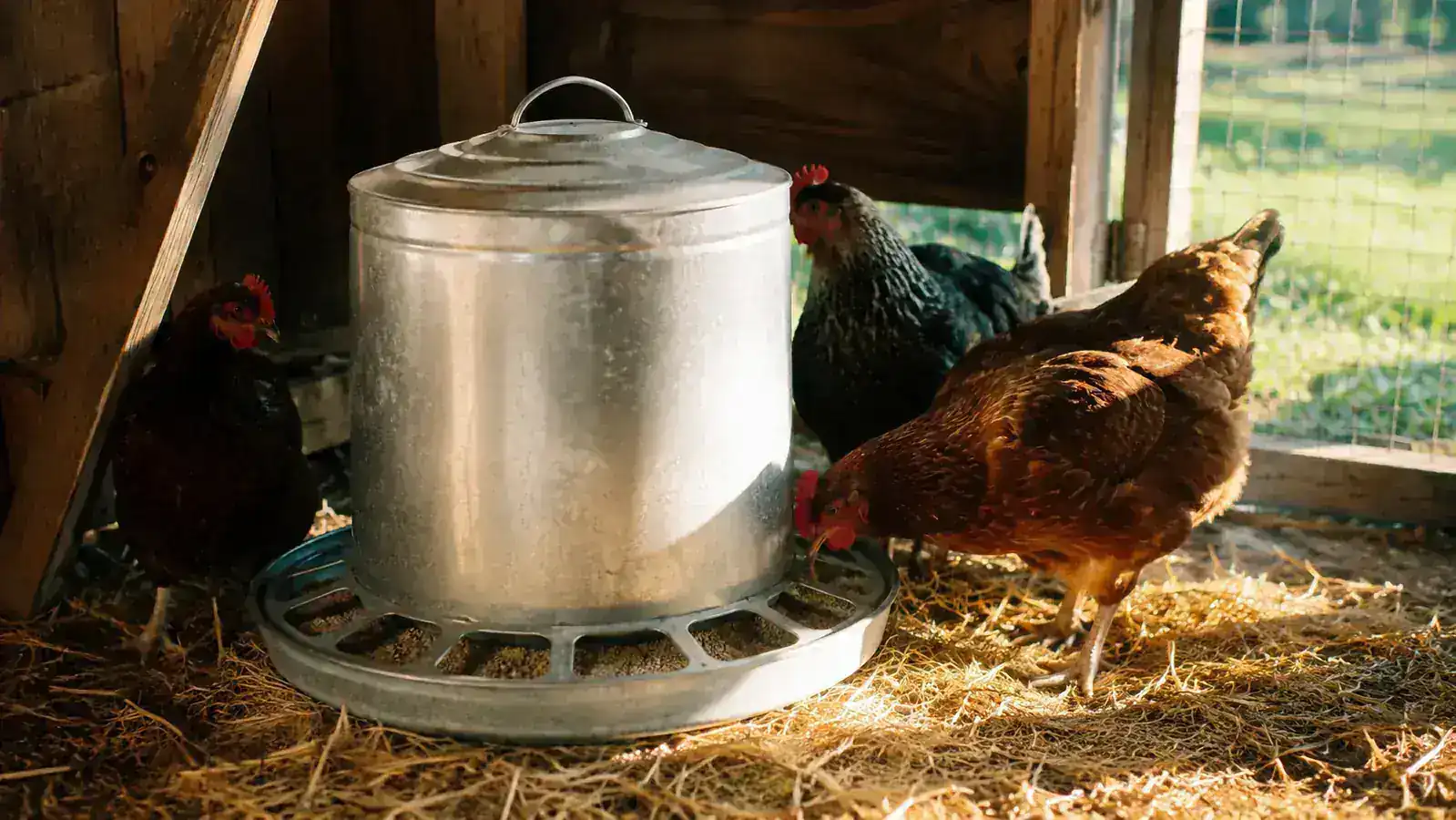
I didn't buy a rat-proof feeder because I read a clever article. I bought one because I was standing at the coop door at dusk and watched a rat saunter right up to our open pan feeder, hop in, and help itself to the grain. Not a quick dart either. It sat there eating like it owned the place, because at that hour it basically did. We keep about a dozen hens, two horses, and a pair of rescue dogs here in rural Missouri, and the last thing I wanted was a rodent getting a comfortable footing that close to my birds' feed and the eggs I gather each afternoon.
That was the moment I stopped defending the cheap open feeder and started looking for something that closes when the chicken walks away. The Grandpa's Feeders 20-pound treadle feeder I ended up with turned out to fix a lot more than the rat problem. It shaved the grain bill, kept the feed dry through our rainy spells, and cut down on the morning chore of refilling a pan that was mostly empty and half scattered across the floor. Here are the ten reasons I'd buy one again, in the order they showed up in daily life.
Close the door on the rats for good
The Grandpa's Feeders 20-pound treadle feeder shuts its lid the second the last hen steps off. If you're tired of dusk visitors eating your grain bill, this is the fix I reached for.
Amazon Check Today's Price on Amazon →It cuts the rats off at the source
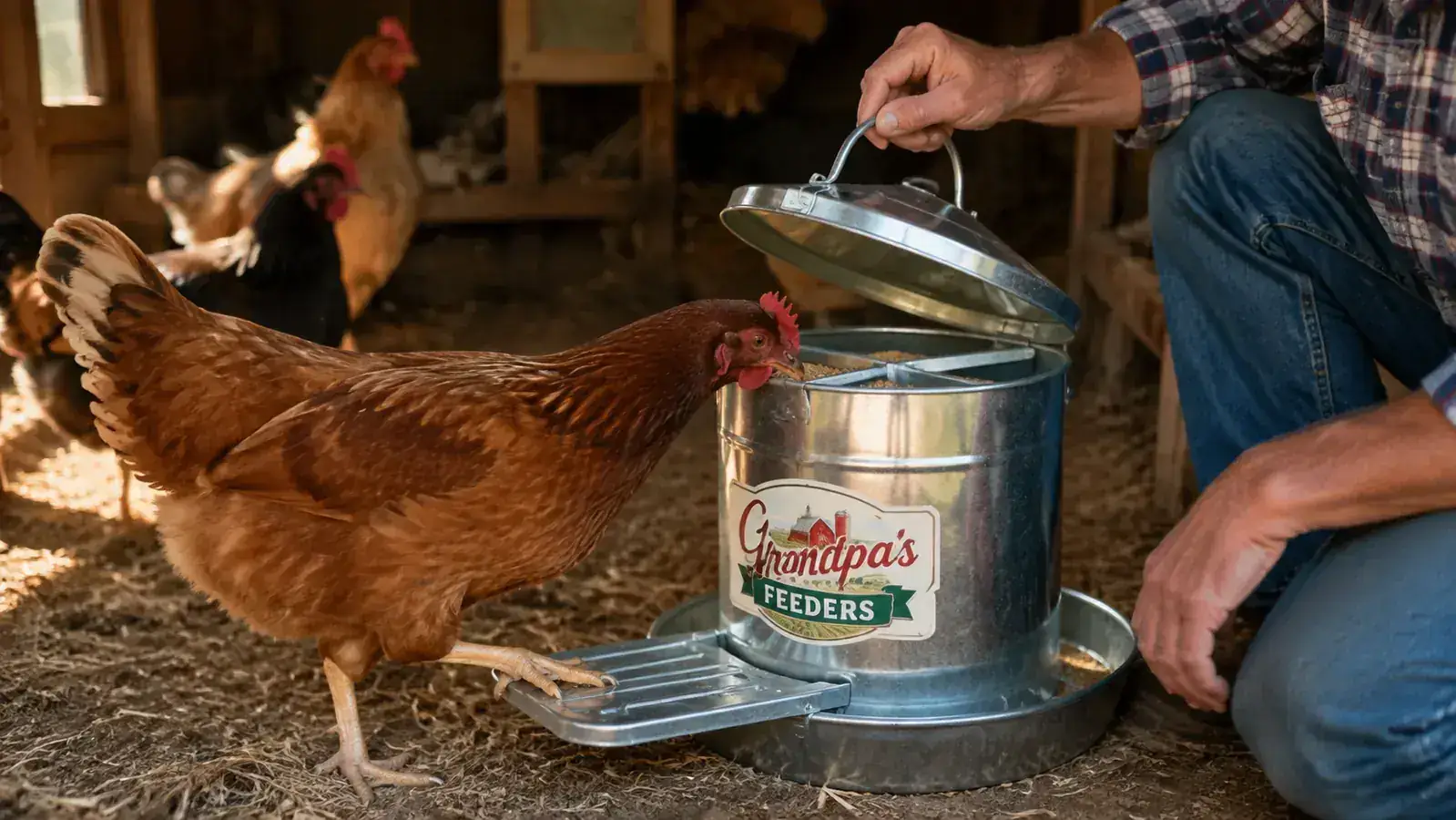
Rats don't move in because they like your coop. They move in because there's a reliable pile of food sitting on the ground with an open top. A treadle feeder holds the grain behind a lid that only opens under a hen's weight, and a rat at dusk is too light to trip it. In the first week we stopped seeing fresh droppings and heard no more rustling at night. That was reason one, and it's the one I cared most about, because once rodents settle in behind a wall they are miserable to evict.
It puts an end to the scratch-and-scatter waste
Chickens love to rake their beaks through an open pile, and what they rake out lands on the floor, gets walked on, and goes to waste. With a treadle, the feed stays inside a trough where they eat it in place. We measure how much feed we go through now, and it's plainly less than before. A bag that used to vanish in two weeks stretches closer to three, which is exactly the kind of difference you notice in the wallet.
It keeps the grain dry in the rain
Missouri rains on us a lot, and a wet pile of feed goes sour in a hurry. The galvanized body and the lid keep the grain under cover even on a soaked morning. I stopped scooping out crusty, clumped, mildewy feed, which I used to do every couple of rainy days. Dry grain also means fewer flies and less musty smell hanging around the coop in the summer heat.
It feeds our hens for up to ten days
The 20-pound hopper holds enough for our small flock to graze on for the better part of two weeks. That means no more filling the pan every single morning with a coffee mug. For us it's a once-a-week or so job, depending on how many are laying and eating hard. On the days we're busy with the horses or the garden, that's one less trip out to the coop to babysit the feed.
The galvanized steel shrugs off pecking and weather
Plastic feeders get brittle in the sun and dented by a hard peck, and I've thrown out my share of cracked bowls. This one is galvanized steel, the same stuff that holds up on the farm for decades. After a year of daily pecking, winter cold, and summer heat, the body still looks like the day it arrived. No rust bleeding through the seams, no warped lid, nothing begging to be replaced. That durability is why it's the once-and-done purchase on this list.
It stops the rim-sitters from pooping in the feed
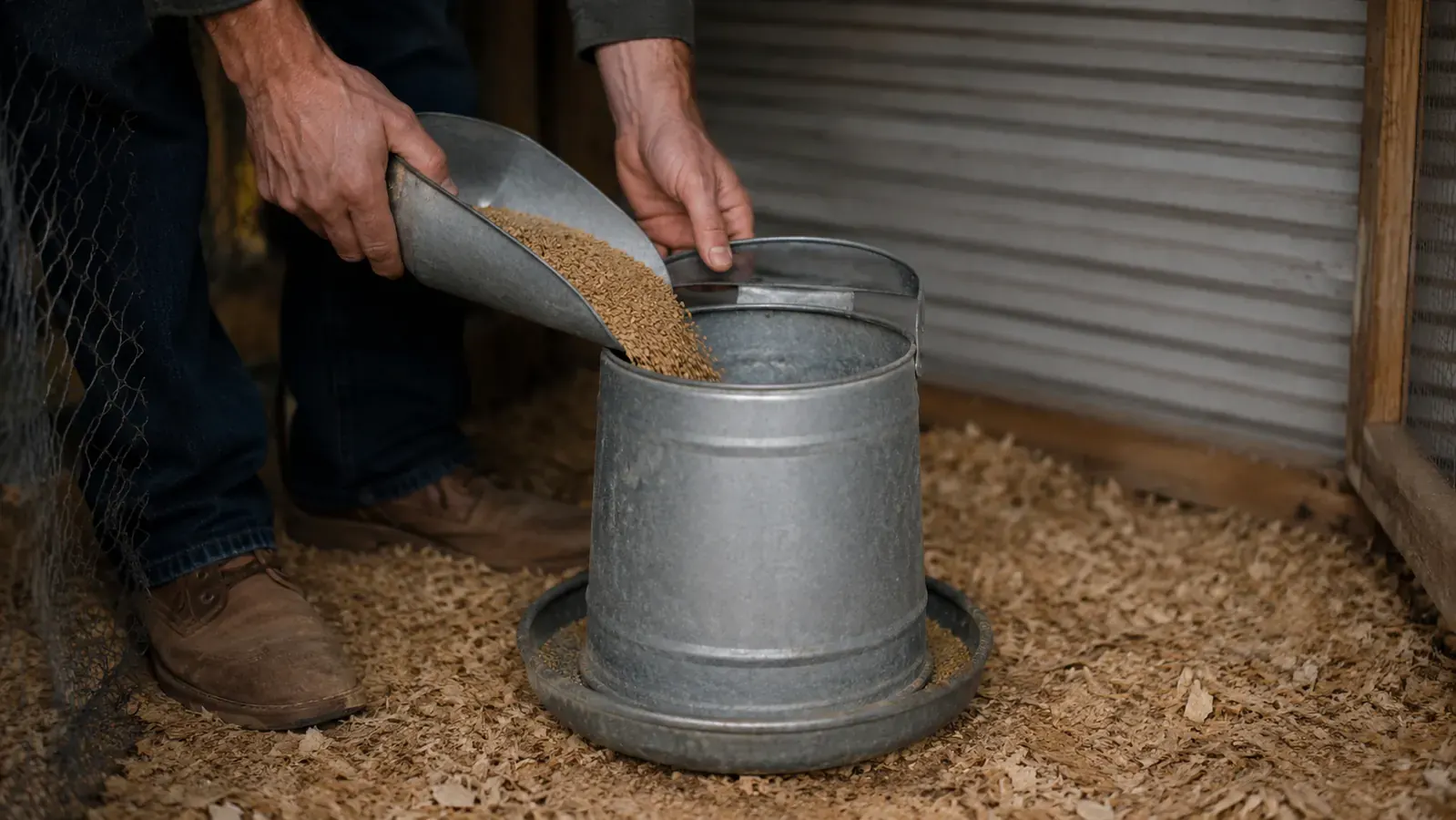
On a flat pan feeder, hens perch right on the rim to eat, and what comes off the back end lands in the food bowl. A treadle has a covered trough, so there's no handy rim to sit on. Our feed stays cleaner, which matters when you're the one handling it twice a week. Cleaner feed also sits better in the hopper longer, since there's no fresh droppings mixed in to speed up spoilage.
It breaks the mouse cycle that follows the rats
Where there are rats, mice are usually close behind, and both of them multiply fast when there's a steady food supply. Once the open pan went away, the whole back line of freeloaders thinned out. It wasn't overnight, but the rodent pressure dropped off and stayed down. We still see the odd mouse in the barn, that's country living, but they're no longer setting up house at the feeder because there's nothing on the menu.
The lid keeps moisture and spoilage off the grain
Humid summer air and morning dew turn exposed grain into a breeding ground for mold. Between the covered hopper and the lid that sits over the trough, the grain in ours stays dry and smells like feed instead of musty storage. That's real peace of mind for a small flock, because sick birds are a bigger cost than any feeder. Dry, clean grain is the cheapest health insurance a flock can get.
It pays for itself in what you stop throwing away
Every pound of feed that got raked onto the floor or soaked in the rain was money in the trash. Add the bagged grain the rats were carrying off each night and it adds up faster than you'd think. Ours covered its cost in wasted feed we stopped losing within a few months. Once you do that math, the sticker on a heavy galvanized feeder looks a lot less scary, because it isn't an expense, it's a reduction.
It's the kind of once-and-done purchase I actually trust
I've bought a parade of cheap coop gadgets that looked clever and quit after a season. This feeder isn't clever-looking, it's just built. Galvanized steel, a heavy lid, a simple treadle that a hen figured out in a day. Ten years of this is the plan, and at a year in it shows no sign of quitting. There's a reason the design has been around as long as it has, and it's that there isn't much to go wrong with it.
What I'd Skip
I'd pass on any treadle feeder made mostly of plastic, because the perching hens and the sun will both work on it, and I've seen thin lids warp. I'd also skip the huge multi-door units if you only keep a few birds, because a small flock needs one solid point of access, not a fortress they have to learn. And I'd skip a rat-proof feeder as your only fix if you've already got an active infestation, because the feeder stops the supply but you still have to deal with the population that's taken up residence somewhere in the barn. The feeder is the prevention, not the cleanup.
A rat sat in our open feeder eating like it owned the place at dusk. The treadle feeder that closes under hen weight ended that, and it paid for itself in wasted grain within a few months.
One solid feeder beats a shelf of clever ones
If you've got an open pan feeder and you've seen any sign of rats, you're feeding more than your hens. The Grandpa's Feeders treadle feeder closes the buffet for good and earns its keep in the grain it stops you from losing.
Amazon Check Today's Price on Amazon →